When does Lent 2027 start?
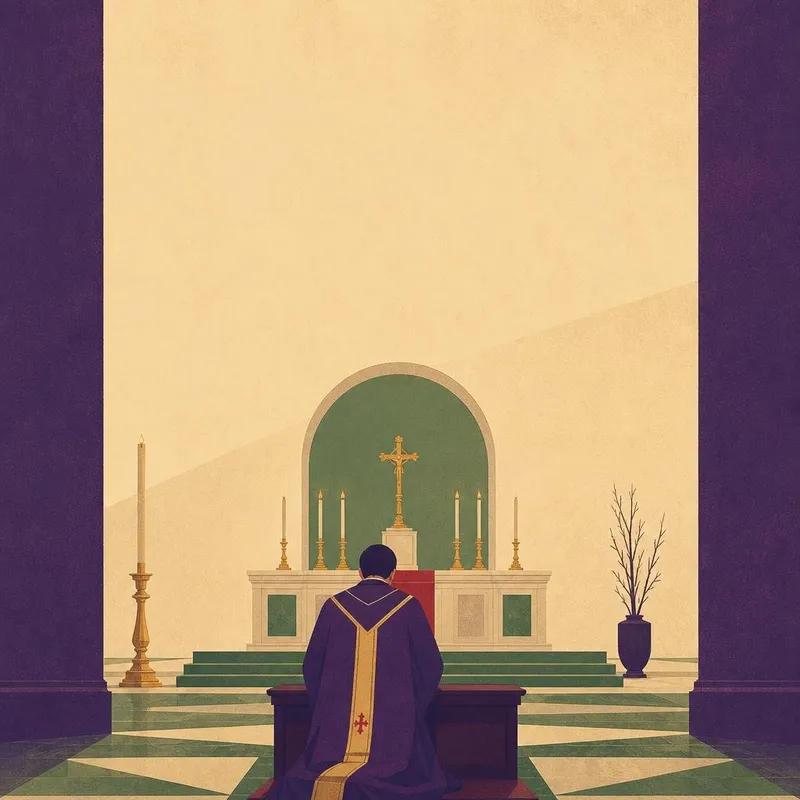
Lent 2027 starts on Ash Wednesday, February 10, 2027, and ends on Holy Thursday, March 25, before the evening Mass of the Lord's Supper, with Easter Sunday on March 28. The season is counted as forty days because its six Sundays are not fast days. Ash Wednesday and Good Friday are days of fasting and abstinence, and every Friday of Lent is a day of abstinence from meat.
Lent 2027 starts on Ash Wednesday, February 10, 2027, and runs to the evening of Holy Thursday, March 25, when the Easter Triduum begins. Easter Sunday is March 28, 2027. Because Easter moves with the moon, Lent moves with it, and in 2027 it comes early.
This post gives every date of Lent 2027 and explains why the season is counted as forty days, what the ashes mean, who has to fast, and what the Church asks between Ash Wednesday and Easter.
When does Lent 2027 start?
Lent 2027 starts on Ash Wednesday, February 10, 2027. The official calendar of the United States bishops lists that Wednesday as "Ash Wednesday" in violet, with the readings Joel 2:12-18, 2 Corinthians 5:20 to 6:2 and Matthew 6:1-6, 16-18. The First Sunday of Lent follows on February 14.
Ash Wednesday has no fixed date. It falls 46 days before Easter Sunday, so it wanders between early February and early March. In 2026 it was February 18; in 2027 it is February 10 (USCCB Liturgical Calendar 2027). The bishops describe the season in one sentence: Lent "is a 40 day season of prayer, fasting, and almsgiving that begins on Ash Wednesday and ends at sundown on Holy Thursday" (USCCB, What is Lent?).
Tuesday, February 9, 2027 is an ordinary weekday in green, the last day of the Ordinary Time that began after the Christmas season ended on January 10. Many countries keep it as Shrove Tuesday, Mardi Gras or the end of Carnival, the last day before the fast.
When does Lent 2027 end?
Lent 2027 ends on Holy Thursday, March 25, 2027, before the evening Mass of the Lord's Supper. That Mass opens the Easter Triduum, three days that form a season of their own: Good Friday, March 26, Holy Saturday, March 27, and Easter Sunday, March 28, 2027.
The calendar lists Thursday, March 25 as "Thursday of Holy Week (Holy Thursday)" with the "Evening Mass of the Lord's Supper". Friday, March 26 is "Friday of the Passion of the Lord (Good Friday)" in red, and Sunday, March 28 is "Easter Sunday of the Resurrection of the Lord" (USCCB Liturgical Calendar 2027).
Holy Week is the last week of Lent. It begins with "Palm Sunday of the Passion of the Lord" on March 21, 2027, in red. Good Friday is a day of fasting, but it belongs to the Triduum rather than to Lent. Easter Time then runs fifty days to Pentecost, Sunday, May 16, 2027 (USCCB Liturgical Calendar 2027).
Why does the date of Lent change every year?
Because Easter does. Easter is the Sunday after the first full moon of spring, so it falls anywhere from late March to late April. Lent is counted backwards from Easter, and Ash Wednesday moves with it. In 2027 Easter is March 28, an early date, so Lent begins on February 10.
The rule is old. The Catechism records that "at the Council of Nicaea in 325, all the Churches agreed that Easter, the Christian Passover, should be celebrated on the Sunday following the first full moon (14 Nisan) after the vernal equinox" (CCC 1170). The same paragraph explains why Orthodox Easter usually falls on another Sunday: the Gregorian reform of 1582 "caused a discrepancy of several days with the Eastern calendar", and "the Western and Eastern Churches are seeking an agreement in order once again to celebrate the day of the Lord's Resurrection on a common date" (CCC 1170).
Fixed feasts sometimes collide with the moveable ones, and 2027 has a collision. March 25 is the Solemnity of the Annunciation, nine months before Christmas, and in 2027 it is also Holy Thursday. The calendar states the solution: "Since March 25 is Thursday of Holy Week (Holy Thursday), the Solemnity of the Annunciation of the Lord is transferred to Monday, April 5" (USCCB Liturgical Calendar 2027).
Why is Lent forty days?
Lent is forty days because Jesus fasted forty days in the desert before his public life, as Moses and Elijah had fasted forty days before him. The Church keeps the number as a sign. Counted from Ash Wednesday to Holy Saturday the season has 46 days, and the six Sundays are not fast days, which leaves forty.
The Gospel is the source. "Then Jesus was led up by the Spirit into the wilderness to be tempted by the devil. And he fasted forty days and forty nights, and afterward he was hungry" (Matthew 4:1-2). The Catechism draws the line to the season: "By the solemn forty days of Lent the Church unites herself each year to the mystery of Jesus in the desert" (CCC 540).
The number comes from further back. Moses on Sinai "was there with the Lord forty days and forty nights; he neither ate bread nor drank water" (Exodus 34:28). Elijah walked "forty days and forty nights to Horeb the mount of God" (1 Kings 19:8). Israel spent forty years in the desert, and the Catechism reads the temptation against that history: "in contrast to those who had once provoked God during forty years in the desert, Christ reveals himself as God's Servant, totally obedient to the divine will" (CCC 539).
From Ash Wednesday, February 10, to Holy Saturday, March 27, 2027 is 46 days. The bishops answer plainly: "It might be more accurate to say that there is the 'forty day fast within Lent.'" The six Sundays "are certainly part of the Time of Lent, but they are not prescribed days of fast and abstinence" (USCCB, Lent FAQs). Take the Sundays out and forty days remain.
What happens on Ash Wednesday?
On Ash Wednesday Catholics go to Mass or to a liturgy of the Word and receive a cross of ashes on the forehead, made from burnt palms. The ashes are a public sign of penance at the start of the season. It is a day of fasting and abstinence from meat, but not a holy day of obligation.
The Directory on Popular Piety and the Liturgy explains the sign: "In the Roman Rite, the beginning of the forty days of penance is marked with the austere symbol of ashes which are used in the Liturgy of Ash Wednesday. The use of ashes is a survival from an ancient rite according to which converted sinners submitted themselves to canonical penance. The act of putting on ashes symbolizes fragility and mortality, and the need to be redeemed by the mercy of God" (Directory on Popular Piety and the Liturgy 125).
As the priest marks each forehead he says one of two sentences from Scripture. One is God's word to Adam after the fall: "you are dust, and to dust you shall return" (Genesis 3:19). The other is the first sentence Jesus preaches in Mark: "repent, and believe in the gospel" (Mark 1:15).
The first reading sets the tone for the season: "'Yet even now,' says the Lord, 'return to me with all your heart, with fasting, with weeping, and with mourning; and rend your hearts and not your garments'" (Joel 2:12-13). The Catechism says the same of every penance: the call to conversion "does not aim first at outward works, 'sackcloth and ashes,' fasting and mortification, but at the conversion of the heart, interior conversion. Without this, such penances remain sterile and false" (CCC 1430).
Ash Wednesday is not among the holy days of obligation, so nobody is bound to attend. In practice it fills churches.
Do Catholics have to fast during Lent?
Yes, on two days. Ash Wednesday and Good Friday are days of fasting and abstinence from meat for Catholics of the Latin Church, and every Friday of Lent is a day of abstinence. Fasting binds adults from 18 to 59, abstinence everyone from 14. Beyond that, the Church asks for penance and leaves the form to each person.
The law is in three canons. "The penitential days and times in the universal Church are every Friday of the whole year and the season of Lent." "Abstinence from meat, or from some other food as determined by the Episcopal Conference, is to be observed on all Fridays, unless a solemnity should fall on a Friday. Abstinence and fasting are to be observed on Ash Wednesday and Good Friday." "The law of abstinence binds those who have completed their fourteenth year. The law of fasting binds those who have attained their majority, until the beginning of their sixtieth year" (Code of Canon Law, canons 1250 to 1252).
Fasting has a precise meaning. "When fasting, a person is permitted to eat one full meal, as well as two smaller meals that together are not equal to a full meal" (USCCB, What is Lent?).
Lent 2027 has one exception built in. Friday, March 19 is the Solemnity of St. Joseph (USCCB Liturgical Calendar 2027), and a solemnity on a Friday lifts the abstinence under canon 1251.
The Catechism counts the fast among the five precepts of the Church. The fifth, "You shall observe the prescribed days of fasting and abstinence," "ensures the times of ascesis and penance which prepare us for the liturgical feasts; they help us acquire mastery over our instincts and freedom of heart" (CCC 2043).
What do Catholics do during Lent?
Three things: pray more, fast, and give alms. These are the forms of penance the Church has named since the Fathers. Many Catholics also go to confession, pray the Stations of the Cross on Fridays and give something up for the whole season. Only the fast days are rules. The rest is chosen.
The Catechism names the three: "Scripture and the Fathers insist above all on three forms, fasting, prayer, and almsgiving, which express conversion in relation to oneself, to God, and to others" (CCC 1434). The Directory describes Lent as "a time to hear the Word of God, to convert, to prepare for and remember Baptism, to be reconciled with God and one's neighbour, and of more frequent recourse to the 'arms of Christian penance'" (Directory 124).
Confession belongs to the season. The Catechism calls Lent and the Fridays of the year "intense moments of the Church's penitential practice", times "particularly appropriate for spiritual exercises, penitential liturgies, pilgrimages as signs of penance, voluntary self-denial such as fasting and almsgiving" (CCC 1438). The Directory recalls "the long ecclesial tradition associating the precept of confessing grave sins and receive Holy Communion at least once during the lenten season, or preferably during Eastertide" (Directory 125). Our posts on the examination of conscience and on confession after years away cover the practical side.
Giving something up is the best-known custom and the least regulated. The bishops note that such practices are "often more effective if they are continuous, i.e., kept on Sundays as well", and that they "are not regulated by the Church, but by individual conscience" (USCCB, Lent FAQs).
What are the key dates of Lent 2027?
Lent 2027 runs from Ash Wednesday, February 10, to Holy Thursday, March 25. Its Sundays fall on February 14, 21 and 28 and March 7, 14 and 21, with Laetare Sunday on March 7 and Palm Sunday on March 21. Easter Sunday is March 28, 2027.
All dates from the official calendar of the United States bishops (USCCB Liturgical Calendar 2027):
- Wednesday, February 10: Ash Wednesday, fasting and abstinence.
- Sunday, February 14: First Sunday of Lent.
- Fridays, February 12, 19 and 26, March 5 and 12: abstinence from meat.
- Sunday, March 7: Fourth Sunday of Lent, Laetare Sunday, "violet or rose".
- Friday, March 19: St. Joseph, a solemnity, no abstinence.
- Sunday, March 21: Palm Sunday of the Passion of the Lord, in red. Holy Week begins.
- Thursday, March 25: Holy Thursday. Lent ends with the evening Mass of the Lord's Supper.
- Friday, March 26: Good Friday, fasting and abstinence.
- Saturday, March 27: Holy Saturday, Easter Vigil at night.
- Sunday, March 28: Easter Sunday of the Resurrection of the Lord.
- Monday, April 5: the Annunciation of the Lord, transferred from March 25.
Lent is the one season the Church asks you to count. Forty days is long enough to change a habit and short enough to see through. The ashes on February 10 mark the start. The empty tomb on March 28 is the reason.
Common questions
When is Ash Wednesday 2027? +
Wednesday, February 10, 2027, which is 46 days before Easter Sunday, March 28 (USCCB Liturgical Calendar 2027). It is a day of fasting and abstinence from meat, but not a holy day of obligation.
When is Easter 2027? +
Sunday, March 28, 2027. The Easter Vigil is celebrated on the night of Holy Saturday, March 27, and the Easter season then runs fifty days to Pentecost on May 16, 2027 (USCCB Liturgical Calendar 2027).
Is Ash Wednesday a holy day of obligation? +
No. Catholics are not obliged to attend Mass on Ash Wednesday, though most parishes celebrate it and many people go. It is a day of fasting and abstinence under canon 1251 of the Code of Canon Law.
Are Sundays part of Lent? +
Yes. "The Sundays of Lent are certainly part of the Time of Lent, but they are not prescribed days of fast and abstinence" (USCCB, Lent FAQs). Whether a personal Lenten sacrifice is kept on Sundays is left to each person's conscience.
Can Catholics eat meat on Fridays in Lent? +
No. Every Friday of Lent is a day of abstinence from meat for Catholics aged 14 and over (canons 1251 and 1252). In 2027 the exception is Friday, March 19, the Solemnity of St. Joseph, when the abstinence does not bind.
How long is Lent? +
Forty days by the Church's count. From Ash Wednesday, February 10, to Holy Saturday, March 27, 2027 is 46 days, but the six Sundays are not fast days, which leaves the "forty day fast within Lent" (USCCB, Lent FAQs).