When is Easter 2027?
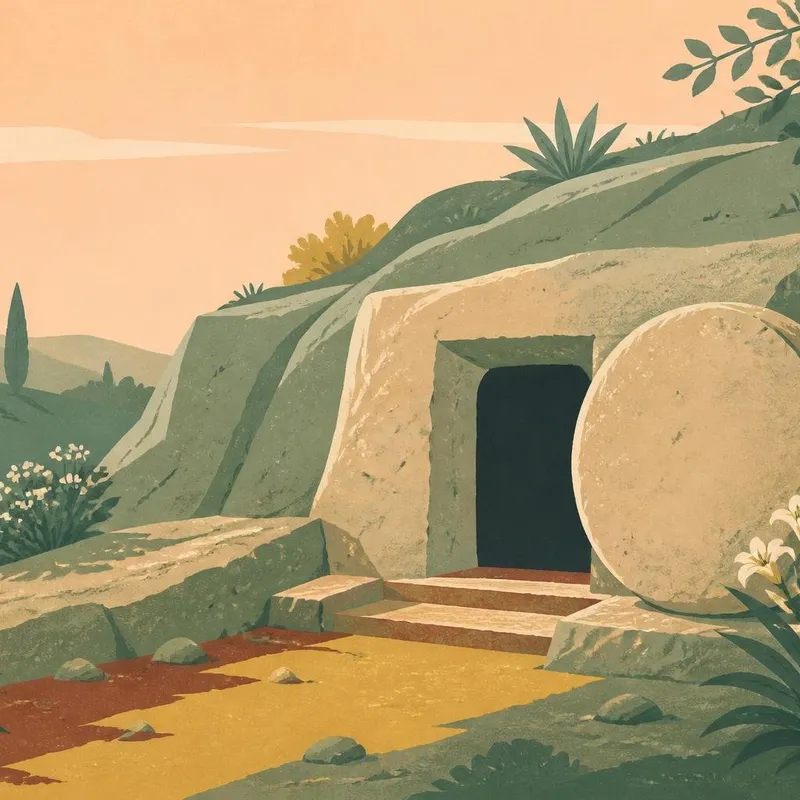
Easter 2027 is Sunday, March 28, 2027, with the Easter Vigil on the night of Holy Saturday, March 27. The date is the first Sunday after the first full moon on or after March 21, so it always falls between March 22 and April 25, and Orthodox Easter 2027 is May 2. The Easter season lasts fifty days, to Pentecost on May 16, 2027.
Easter 2027 is Sunday, March 28, 2027. The Easter Vigil is celebrated on the night of Holy Saturday, March 27, and the Easter season runs fifty days to Pentecost on May 16. Orthodox Christians celebrate Easter, which they call Pascha, five weeks later, on May 2, 2027.
This post explains how the Church sets the date, why the Orthodox date differs, what happens at the Easter Vigil, how long Easter lasts, and every key date from Palm Sunday to Pentecost 2027.
When is Easter 2027?
Easter Sunday 2027 falls on March 28. The official calendar of the United States bishops lists it as "Easter Sunday of the Resurrection of the Lord", a solemnity, in white. It is an early Easter: the date can fall anywhere from March 22 to April 25, and 2027 sits near the front of that range.
The same calendar gives the principal dates of the year in one table: Ash Wednesday on February 10, Easter Sunday on March 28, the Ascension on May 6, Pentecost on May 16 and the Body and Blood of Christ on May 30 (USCCB Liturgical Calendar 2027). The Easter Vigil belongs to Holy Saturday, March 27, and is celebrated after nightfall.
How is the date of Easter calculated?
Easter is the first Sunday after the first full moon on or after the spring equinox, which the Church fixes at March 21. That rule goes back to the Council of Nicaea in 325. Because both the moon and the weekday change from year to year, Easter always falls between March 22 and April 25.
The Catechism records the decision of Nicaea: "At the Council of Nicaea in 325, all the Churches agreed that Easter, the Christian Passover, should be celebrated on the Sunday following the first full moon (14 Nisan) after the vernal equinox" (CCC 1170). The reference to 14 Nisan ties the feast to the Jewish Passover, the feast during which Jesus died and rose.
The bishops give the working version of the rule: "Easter is celebrated on the first Sunday after the Paschal full moon, which is the first full moon occurring either on or after the spring equinox (March 21). As a result, Easter will always fall between March 22 and April 25" (USCCB, Easter).
Easter is always a Sunday because the Resurrection happened on a Sunday. The Gospels agree on the day: "Now on the first day of the week Mary Magdalene came to the tomb early, while it was still dark, and saw that the stone had been taken away from the tomb" (John 20:1). The rest of the year is counted from Easter. Ash Wednesday comes 46 days before it, Pentecost 49 days after. Our post on when Lent 2027 starts works through the count backwards.
Why is Orthodox Easter on a different date?
Orthodox Easter 2027 is Sunday, May 2, five weeks after the Catholic date. Both Churches use the rule of Nicaea, but the Orthodox Churches calculate it with the older Julian calendar, while Rome uses the Gregorian calendar introduced in 1582. Some years the two dates coincide; in 2027 they do not.
The Catechism explains the difference in the same paragraph that records Nicaea: "the reform of the Western calendar, called 'Gregorian' after Pope Gregory XIII (1582), caused a discrepancy of several days with the Eastern calendar. Today, the Western and Eastern Churches are seeking an agreement in order once again to celebrate the day of the Lord's Resurrection on a common date" (CCC 1170).
The Orthodox Church in America lists Pascha on May 2 in 2027 and on April 16 in 2028 (OCA, Paschal Cycle). April 16, 2028 is also the Catholic date, so in 2028 East and West keep Easter on the same Sunday.
What are the key dates around Easter 2027?
Holy Week begins on Palm Sunday, March 21, 2027. The Easter Triduum runs from the evening of Holy Thursday, March 25, to Easter Sunday, March 28. The Easter season then runs to Pentecost, May 16, with the Ascension on May 6 or, in most of the United States, on Sunday, May 9.
All dates come from the official calendar of the United States bishops (USCCB Liturgical Calendar 2027):
- Wednesday, February 10: Ash Wednesday, the start of Lent.
- Sunday, March 21: Palm Sunday of the Passion of the Lord. Holy Week begins.
- Thursday, March 25: Holy Thursday, Evening Mass of the Lord's Supper. The Triduum begins.
- Friday, March 26: Good Friday, a day of fasting and abstinence.
- Saturday, March 27: Holy Saturday, Easter Vigil after nightfall.
- Sunday, March 28: Easter Sunday of the Resurrection of the Lord.
- Monday, March 29, to Saturday, April 3: the Octave of Easter.
- Sunday, April 4: Second Sunday of Easter, or Sunday of Divine Mercy.
- Monday, April 5: the Annunciation of the Lord, moved from March 25.
- Thursday, May 6: the Ascension of the Lord, kept on Sunday, May 9 in most United States provinces.
- Sunday, May 16: Pentecost Sunday. The Easter season ends.
The Annunciation moves because March 25, 2027 is Holy Thursday. The calendar notes: "Since March 25 is Thursday of Holy Week (Holy Thursday), the Solemnity of the Annunciation of the Lord is transferred to Monday, April 5." For the Ascension it adds that only the provinces of Boston, Hartford, New York, Omaha and Philadelphia keep the Thursday. "All other ecclesiastical provinces of the United States of America have transferred this Solemnity to the following Sunday, May 9." Other countries decide this for themselves, so check your own diocesan calendar.
Why is Easter the most important Catholic feast?
Because the Resurrection is the centre of the faith. If Christ did not rise, Saint Paul says, Christian preaching is empty. The Church calls Easter the "Feast of feasts" and every Sunday of the year a small Easter. The whole liturgical calendar, from Advent to Christ the King, is arranged around it.
The Catechism puts it without hedging: "The Resurrection of Jesus is the crowning truth of our faith in Christ, a faith believed and lived as the central truth by the first Christian community" (CCC 638). Paul states the stakes: "if Christ has not been raised, then our preaching is in vain and your faith is in vain" (1 Corinthians 15:14). And then the answer: "But in fact Christ has been raised from the dead, the first fruits of those who have fallen asleep" (1 Corinthians 15:20).
The liturgy ranks the feast accordingly. "Easter is not simply one feast among others, but the 'Feast of feasts,' the 'Solemnity of solemnities,' just as the Eucharist is the 'Sacrament of sacraments'" (CCC 1169). The year is built outward from it: "Beginning with the Easter Triduum as its source of light, the new age of the Resurrection fills the whole liturgical year with its brilliance" (CCC 1168).
Sunday is the weekly echo of Easter. "Jesus rose from the dead 'on the first day of the week.' Because it is the 'first day,' the day of Christ's Resurrection recalls the first creation" (CCC 2174). That is why the Church asks Catholics to keep every Sunday, and why missing Sunday Mass is treated as a serious matter.
What happens at the Easter Vigil?
The Easter Vigil is the Church's main celebration of Easter, held after dark on Holy Saturday. It begins with a new fire and the Paschal candle carried into a dark church, continues with the Exsultet and up to nine readings, then baptism of new Christians, and ends with the first Mass of Easter.
The bishops call it the "Mother of All Vigils" and add that "Easter Sunday is the greatest of all Sundays" (USCCB, Easter). In 2027 it begins after nightfall on Saturday, March 27. A Mass on the evening before a feast counts for the feast under canon 1248 of the Code of Canon Law, so the Vigil is an Easter Mass in the full sense.
The light comes first. "The Paschal Candle used during the Easter Vigil is a central symbol of this divine light, which is Christ" (USCCB, Easter). The deacon or a cantor then sings the Exsultet, the long Easter proclamation that the Catechism quotes: "O truly blessed Night, sings the Exsultet of the Easter Vigil, which alone deserved to know the time and the hour when Christ rose from the realm of the dead" (CCC 647).
The Liturgy of the Word follows. The 2027 calendar notes that "nine readings are assigned to the Easter Vigil: seven from the Old Testament and two from the New", from the creation account to Saint Mark's account of the empty tomb, and that "the reading from Exodus about the escape through the Red Sea (reading 3) should never be omitted" (USCCB Liturgical Calendar 2027). After the readings from the Old Testament the Gloria is sung, and before the Gospel the Alleluia returns for the first time since Lent began.
Then come the sacraments. Adults who have prepared through Lent are baptized, confirmed and receive their first Communion, the three sacraments of initiation in one night. The Directory on Popular Piety and the Liturgy describes the whole celebration as "permeated by a sense of newness": "fire and water have been renewed; Christian hearts have been renewed through the Sacrament of Penance, and, where possible, through administration of the Sacraments of Christian initiation" (Directory on Popular Piety and the Liturgy 150).
How long does the Easter season last?
Fifty days. Easter Time runs from Easter Sunday, March 28, to Pentecost Sunday, May 16, 2027, and the Church treats the whole stretch as one feast. Its first eight days, the Octave, are each celebrated as a solemnity. The liturgical colour throughout is white, and the Paschal candle stays lit at every Mass.
The rule is set out in the Universal Norms on the Liturgical Year and the Calendar, quoted by the bishops: "The fifty days from the Sunday of the Resurrection to Pentecost Sunday are celebrated in joy and exultation as one feast day, indeed as one 'great Sunday.' These are the days above all others in which the Alleluia is sung" (no. 22). "The first eight days of Easter Time constitute the Octave of Easter and are celebrated as Solemnities of the Lord" (no. 24, USCCB, Easter).
Popular customs fill the season too. The Directory mentions "the traditional blessing of eggs, the symbol of life, and the blessing of the family table", which "is particularly important on Easter Sunday", and the annual blessing of homes that "takes places in their homes during Eastertide" (Directory 150 and 152).
What does the Church ask of Catholics at Easter?
Two things. Catholics go to Mass on Easter Sunday, as on every Sunday, and every Catholic who has made a first Communion is to receive Communion at least once a year, during the Easter season. Many prepare by going to confession during Lent.
The Easter duty is the third of the precepts of the Church: "You shall humbly receive your Creator in Holy Communion at least during the Easter season," which "guarantees as a minimum the reception of the Lord's Body and Blood in connection with the Paschal feasts, the origin and center of the Christian liturgy" (CCC 2042). The Code of Canon Law says the same: "each of the faithful is obliged to receive holy communion at least once a year", and "this precept must be fulfilled during the Easter season unless it is fulfilled for a just cause at another time during the year" (canon 920).
The same paragraph of the Catechism links Communion to confession. The second precept, "You shall confess your sins at least once a year", "ensures preparation for the Eucharist by the reception of the sacrament of reconciliation" (CCC 2042). Our guides to the Eucharist and to confession after years away cover both.
The minimum is not the point. Easter asks for joy as well as attendance. The psalm of Easter Sunday says it plainly: "This is the day which the Lord has made; let us rejoice and be glad in it" (Psalm 118:24). In 2027 that day is March 28.
Common questions
When is Orthodox Easter 2027? +
Sunday, May 2, 2027, five weeks after the Catholic Easter on March 28. The Orthodox Churches calculate Easter with the Julian calendar (OCA, Paschal Cycle). In 2028 both fall on April 16.
When is Easter 2028? +
Sunday, April 16, 2028, with Ash Wednesday on March 1 and Pentecost on June 4 (USCCB Liturgical Calendar 2028). Orthodox Christians celebrate Easter on the same Sunday that year.
What is the earliest and latest date Easter can fall? +
Easter can fall no earlier than March 22 and no later than April 25 (USCCB, Easter). It is the first Sunday after the first full moon on or after March 21, so the date depends on both the moon and the weekday.
Does the Easter Vigil count as Easter Sunday Mass? +
Yes. Under canon 1248 of the Code of Canon Law, a Mass celebrated on the evening before a feast fulfils the obligation for that feast. The Easter Vigil on Saturday night, March 27, 2027, is an Easter Mass.
When is Divine Mercy Sunday 2027? +
Sunday, April 4, 2027, the Second Sunday of Easter, which the calendar also names the Sunday of Divine Mercy (USCCB Liturgical Calendar 2027). It closes the Octave of Easter.
When is Pentecost 2027? +
Sunday, May 16, 2027, fifty days after Easter counting Easter Sunday itself (USCCB Liturgical Calendar 2027). Pentecost ends the Easter season, and Ordinary Time resumes the next day.