How to pray Lectio Divina
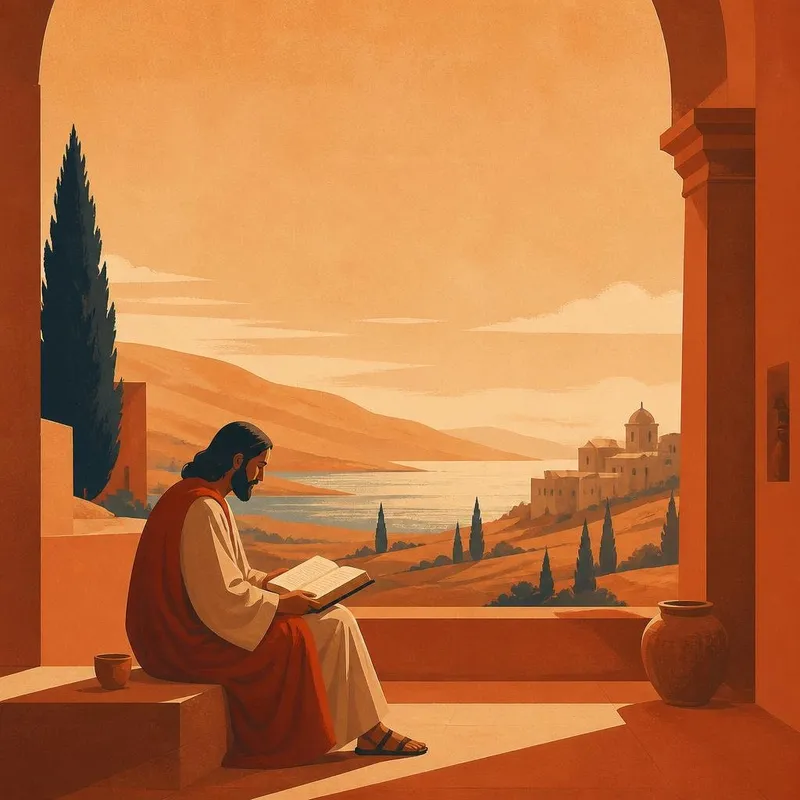
Lectio Divina is prayerful reading of Scripture in four steps: read a short passage slowly (lectio), reflect on what it says to you (meditatio), answer God in prayer (oratio), and rest silently with him (contemplatio), with a small action (actio) to follow. Start with the day's Gospel and fifteen to twenty minutes at a fixed time. The Church has recommended it from Origen and St. Benedict to the Second Vatican Council and Pope Benedict XVI's Verbum Domini.
Lectio Divina is a way of praying with a short passage of Scripture. The Latin means "divine reading" or "sacred reading." You read a passage slowly, think about what it says to you, answer God in prayer, and then rest quietly in his presence. It needs a Bible, a quiet place and about fifteen minutes.
What is Lectio Divina?
Lectio Divina is slow, prayerful reading of the Bible in four movements: reading, meditation, prayer and contemplation. The aim is not to cover a lot of text or to learn facts about it. The aim is to let God speak through a few verses and to answer him.
The Catechism describes it in one line: lectio divina is the practice "where the Word of God is so read and meditated that it becomes prayer" (CCC 1177).
Where does Lectio Divina come from?
The practice is as old as Christian reading of the Bible. Origen taught it in the third century, St. Benedict built it into the monastic day in the sixth, and in the twelfth a Carthusian monk, Guigo II, named its four steps in a short work known as the Ladder of Monks.
Pope Benedict XVI called Origen "one of the great masters of this way of reading the Bible" and quoted his advice to a student: "Devote yourself to the lectio of the divine Scriptures; apply yourself to this with perseverance" (Verbum Domini 86). Origen added that reading is not enough: "what is absolutely necessary is oratio," prayer.
St. Benedict made the practice a fixed part of the monk's day. Chapter 48 of his Rule opens: "Idleness is the enemy of the soul," and sets times for manual labor and "at fixed hours in sacred reading" (Rule of St. Benedict, ch. 48). The Latin phrase is lectione divina.
Guigo II, prior of the Grande Chartreuse, described the steps as rungs of a ladder: lectio, meditatio, oratio, contemplatio. The Catechism quotes the summary that grew out of his work, "Seek in reading and you will find in meditating; knock in mental prayer and it will be opened to you by contemplation," and its footnote credits Guigo the Carthusian (CCC 2654). The line paraphrases Jesus' own words: "seek, and you will find; knock, and it will be opened to you" (Matthew 7:7).
How do you pray Lectio Divina, step by step?
Choose a short passage. Read it slowly (lectio), think about what it says to you (meditatio), speak to God about it (oratio), then rest silently with him (contemplatio). Pope Benedict XVI, in Verbum Domini 87, also names a fifth step, a concrete action (actio). Begin with a brief prayer to the Holy Spirit.
1. Lectio: read. Read the passage slowly, twice, aloud if you can. Notice who is speaking, what happens, and which word or phrase catches you. The question here is what the text actually says. Verbum Domini warns that without this step "there is always a risk that the text will become a pretext for never moving beyond our own ideas."
2. Meditatio: meditate. Go back to the word or phrase that caught you and repeat it. Turn it over. Verbum Domini puts the question as "what does the biblical text say to us?" The Catechism says that meditating on what we read "helps us to make it our own by confronting it with ourselves" (CCC 2706).
3. Oratio: pray. Now answer. Verbum Domini asks "what do we say to the Lord in response to his word?" and lists the forms: "petition, intercession, thanksgiving and praise." Say what is true: thanks, a request, an apology, a question.
4. Contemplatio: contemplate. Stop talking. Stay with God in silence for a few minutes. The Catechism calls contemplative prayer "a gaze of faith fixed on Jesus, an attentiveness to the Word of God, a silent love" (CCC 2724).
5. Actio: act. Verbum Domini adds that lectio divina "is not concluded until it arrives at action," which "moves the believer to make his or her life a gift for others in charity." Choose one small thing to do today because of what you read.
What does Lectio Divina look like with a real passage?
Take the visit of Jesus to Martha and Mary in Luke 10:38 to 42. It is five verses long, it fits in one sitting, and it happens to be about listening to Jesus. Here is one way fifteen minutes with it might go.
Lectio. Read the passage twice (Luke 10:38 to 42). Martha welcomes Jesus into her house. Her sister Mary "sat at the Lord's feet and listened to his teaching." Martha, "distracted with much serving," complains. Jesus answers: "Martha, Martha, you are anxious and troubled about many things; one thing is needful. Mary has chosen the good portion, which shall not be taken away from her." Suppose the phrase that stops you is "anxious and troubled about many things."
Meditatio. Repeat the phrase slowly. What are the many things today? A deadline, a hard conversation, a parent's test results. Jesus says Martha's name twice, gently, calling her back from the worry inside her work. Ask what "one thing is needful" would mean in your actual day.
Oratio. Answer him in plain words. "Lord, I am anxious about many things. I bring you each one. Show me the one thing you want from me today. Help me to sit with you before I run."
Contemplatio. Then be quiet, like Mary at his feet. If the mind wanders, return to the word "Martha, Martha," hearing your own name in its place, and let it go again. Three or four minutes is enough at the start.
Actio. Choose one concrete act. Put the phone in another room during dinner and listen to the person across the table, or give the first ten minutes of tomorrow to the Gospel before the inbox.
Another day the same passage may stop you on a different phrase, such as "the good portion." That is normal.
How do you choose a passage, and how long does it take?
The simplest choice is the Gospel of the day's Mass, which links your prayer to the liturgy the whole Church celebrates that day. Keep the passage short: a single scene or ten verses at most. Fifteen to twenty minutes is a good length to start.
The daily readings are free on the USCCB website. Verbum Domini says that "the privileged place for the prayerful reading of sacred Scripture is the liturgy," and that personal reading "prepares for, accompanies and deepens what the Church celebrates" (Verbum Domini 86).
The Gospels are the natural place to begin. The Catechism names "the Sacred Scriptures, particularly the Gospels" first among the aids to meditation (CCC 2705).
Pick a fixed time and keep it, the way the Rule of St. Benedict gave reading its fixed hours. The Catechism is blunt about time: "One does not undertake contemplative prayer only when one has the time: one makes time for the Lord" (CCC 2710). Unlike a novena, Lectio Divina has no set number of days.
How is Lectio Divina different from Bible study and Ignatian contemplation?
Bible study asks what a text means; Lectio Divina asks what God is saying to you through it and answers him. Ignatian contemplation uses the imagination to place you inside a Gospel scene. Lectio Divina stays closer to the words themselves. All three are good, and they support each other.
Bible study works with commentaries, history, language and cross-references. The first step of lectio depends on it, but the goal differs. Verbum Domini says Origen held that "understanding Scripture demands, even more than study, closeness to Christ and prayer" (Verbum Domini 86). Study can end in a well-understood text. Lectio ends in a conversation.
Ignatian contemplation comes from the Spiritual Exercises of St. Ignatius of Loyola. You picture the place, the people and what they say, and take part in the scene. Ignatius asks the person praying "to see with the sight of the imagination" the place where the Gospel event happens (Spiritual Exercises). With Martha and Mary, you might picture the room, smell the cooking and hear Martha's voice. Lectio Divina would stay with a phrase, "one thing is needful," and repeat it.
The Catechism holds both under the heading of meditation, which "engages thought, imagination, emotion, and desire," and adds: "Christian prayer tries above all to meditate on the mysteries of Christ, as in lectio divina or the rosary" (CCC 2708). It also reminds us that "a method is only a guide" (CCC 2707). Lectio Divina in the morning sits well beside the Daily Examen at night, and the Rosary is the other method the Catechism names.
What if you get distracted or feel nothing?
Distraction and dryness are normal. The Catechism calls distraction "the habitual difficulty in prayer" and says the answer is not to fight each stray thought but to turn back to the heart. Dryness, when the passage seems to say nothing, is a time to keep praying in faith.
On distraction, the Catechism is practical: "To set about hunting down distractions would be to fall into their trap, when all that is necessary is to turn back to our heart" (CCC 2729). Return to the word or phrase you chose and say it again. A distraction can even be useful: the Catechism notes that it "reveals to us what we are attached to." If the same worry keeps interrupting, bring it into the oratio.
On dryness, the Catechism says: "Another difficulty, especially for those who sincerely want to pray, is dryness," and calls it "the moment of sheer faith clinging faithfully to Jesus in his agony and in his tomb" (CCC 2731). On a dry day, read the passage, say one honest sentence to God, sit quietly for a minute and stop. Faithfulness counts more than feeling.
Do not expect step four every time: in contemplation, Verbum Domini says, we take up God's own way of seeing reality "as a gift from God," not as a result we produce.
What does the Church say about Lectio Divina?
The Church strongly recommends it. The Second Vatican Council urged all the faithful to read Scripture often and to pair reading with prayer. Pope Benedict XVI set out its steps in Verbum Domini, and the Catechism names it as an example of Christian meditation.
The Council's constitution on revelation says the faithful should read Scripture often, and adds: "let them remember that prayer should accompany the reading of Sacred Scripture, so that God and man may talk together; for 'we speak to Him when we pray; we hear Him when we read the divine saying'" (Dei Verbum 25). The quotation inside is from St. Ambrose, and the Catechism repeats the passage in CCC 2653.
Verbum Domini, written after the 2008 Synod of Bishops on the word of God, describes lectio divina as "truly 'capable of opening up to the faithful the treasures of God's word, but also of bringing about an encounter with Christ, the living word of God'" (Verbum Domini 87). It also warns against "an individualistic approach": "the sacred text must always be approached in the communion of the Church" (Verbum Domini 86).
The Catechism ties the practice to the Liturgy of the Hours: lectio divina "is thus rooted in the liturgical celebration" (CCC 1177). Like the Angelus, it takes the rhythm of the Church's public prayer into an ordinary day. Verbum Domini ends its account of the steps with Mary, who "kept all these things, pondering them in her heart" (Luke 2:19). That verse holds the whole method.
Common questions
Can Lectio Divina be prayed in a group? +
Yes. Verbum Domini describes prayerful reading as "personal and communal." In a group, one person reads the passage aloud, a few minutes of silence follow, members share a word or phrase without discussion, and the group closes with prayer. Parishes and families use this form often.
Which Bible translation should I use? +
Use a Catholic edition approved by the Church, such as the New American Bible on the USCCB website or the RSV Catholic Edition. A translation you understand easily is better for lectio than one that sends you to footnotes every line.
Is there an indulgence for reading Scripture? +
Yes. The Church's handbook of indulgences grants a plenary indulgence, under the usual conditions, for reading Scripture as spiritual reading for at least half an hour, and a partial indulgence for less (Enchiridion Indulgentiarum, concession 30).
Do I have to reach contemplation every time? +
No. Contemplation is received, not achieved. Verbum Domini says that in it we take up God's way of seeing reality "as a gift from God." Some days you will read, think and pray and never feel still. That is still Lectio Divina, and it is still prayer.
Can I use the Old Testament or the Psalms? +
Yes. Any part of Scripture can be prayed this way. The Psalms are already prayers and suit lectio especially well. The Gospels are the usual place to begin, because they put Christ himself in front of you.