What is a sacramental?
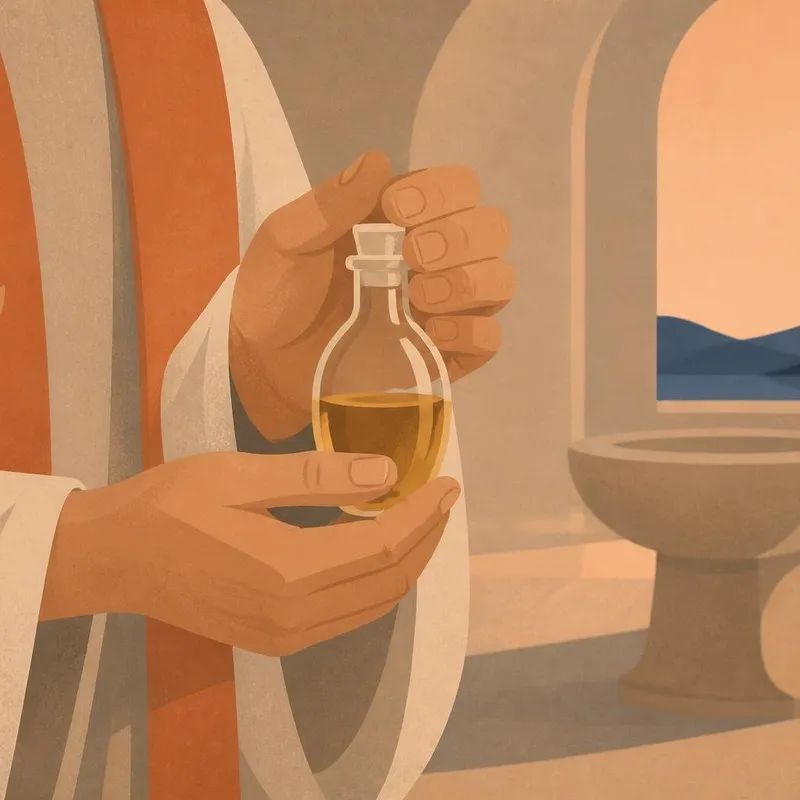
A sacramental is a sacred sign instituted by the Church, such as a blessing, holy water, a crucifix, a rosary or a medal, that prepares people to receive grace and makes ordinary moments of life holy. Unlike the seven sacraments, which Christ instituted and in which he himself acts, sacramentals work through the Church's prayer and the faith of the person using them. Treated as lucky charms, they become superstition.
A sacramental is a sacred sign, instituted by the Church, that prepares a person to receive grace and makes the ordinary parts of life holy. Blessings are the chief sacramentals, and the familiar objects of Catholic life belong with them: holy water, the crucifix on the wall, a rosary, a medal, the ashes of Ash Wednesday, the palms of Palm Sunday. They surround the seven sacraments the way a frame surrounds a picture, and the Church takes care to keep them in that place.
What is a sacramental?
A sacramental is a sacred sign that resembles a sacrament but is instituted by the Church rather than by Christ. Through the prayer of the Church it signifies spiritual effects, disposes people to receive grace and sanctifies the circumstances of daily life. Every sacramental includes a prayer, and most add a gesture or an object.
The Catechism takes its definition from the Second Vatican Council: sacramentals "are sacred signs which bear a resemblance to the sacraments. They signify effects, particularly of a spiritual nature, which are obtained through the intercession of the Church. By them men are disposed to receive the chief effect of the sacraments, and various occasions in life are rendered holy" (CCC 1667). The Code of Canon Law says the same in fewer words, describing effects that are signified "in some imitation of the sacraments" (Code of Canon Law, can. 1166).
The Catechism also names what every sacramental has in common: "They always include a prayer, often accompanied by a specific sign, such as the laying on of hands, the sign of the cross, or the sprinkling of holy water (which recalls Baptism)" (CCC 1668). The prayer is the core. A blessed object is an object over which the Church has prayed.
How is a sacramental different from a sacrament?
The seven sacraments were instituted by Christ, and Christ himself acts in them to give the grace they signify. Sacramentals were instituted by the Church and work through the Church's prayer. They do not give grace the way a sacrament does; they prepare a person to receive grace and to cooperate with it.
The Catechism defines the sacraments as "efficacious signs of grace, instituted by Christ and entrusted to the Church, by which divine life is dispensed to us" (CCC 1131). They act ex opere operato, "by the very fact of the action's being performed," because "the power of Christ and his Spirit acts in and through it, independently of the personal holiness of the minister" (CCC 1128). Our guide to the seven sacraments walks through each one.
Sacramentals work differently: "Sacramentals do not confer the grace of the Holy Spirit in the way that the sacraments do, but by the Church's prayer, they prepare us to receive grace and dispose us to cooperate with it" (CCC 1670). A valid baptism gives grace even when the priest is a poor one. Holy water does nothing for someone who uses it as a lucky charm.
The seven sacraments are fixed. Sacramentals are not: "The Apostolic See alone can establish new sacramentals, authentically interpret those already received, or abolish or change any of them" (can. 1167). Under the bishops' pastoral decisions they can also respond to "the needs, culture, and special history of the Christian people of a particular region or time" (CCC 1668).
What are some examples of sacramentals?
Blessings come first: of people, meals, objects and places. Then come the blessed things Catholics keep and use, such as holy water, crucifixes, rosaries, medals, scapulars, candles, ashes and palms. The consecration of a church or an altar, religious profession and exorcism are sacramentals too.
Blessings. "Among sacramentals blessings (of persons, meals, objects, and places) come first" (CCC 1671). Grace before meals, a parent tracing a cross on a child's forehead and the blessing at the end of Mass all belong here. The Directory on Popular Piety and the Liturgy recommends that families be blessed in their homes during Eastertide, "or at other times of the year" (Directory, 152).
Lasting blessings. Some blessings "consecrate persons to God, or reserve objects and places for liturgical use" (CCC 1672). Examples include religious profession, the dedication of a church and the blessing of holy oils and bells.
Blessed objects. Holy water, crucifixes, rosaries, medals, scapulars and statues are sacramentals once the Church has blessed them for devotion. The Brown Scapular, a small form of the Carmelite habit, is given by "a special rite of the Church" (Directory, 205). The Church blesses Marian medals in the belief that "they help to remind the faithful of the love of God, and to increase trust in the Blessed Virgin Mary" (Directory, 206). Our guide to praying the Rosary covers the most common of them.
Signs of the seasons. Ashes on Ash Wednesday symbolize "fragility and mortality, and the need to be redeemed by the mercy of God" (Directory, 125). On the First Sunday of Advent, November 29, 2026, many families bless an Advent wreath, whose candles are "a symbol of the prophetic light gradually illuminating the long night prior to the rising of the Sun of justice" (Directory, 98).
Exorcism. When the Church asks "publicly and authoritatively in the name of Jesus Christ that a person or object be protected against the power of the Evil One," that is an exorcism (CCC 1673). A simple form is part of every baptism. The Catechism adds that illness, "especially psychological illness, is a very different matter."
Why are blessings the most important sacramentals?
Every other sacramental grows out of a blessing. A blessing praises God for his gifts and asks him to let people use those gifts well. Holy water is water the Church has blessed, and a medal becomes a sacramental because the Church has prayed over it.
"Every blessing praises God and prays for his gifts," the Catechism says, and the Church blesses "by invoking the name of Jesus, usually while making the holy sign of the cross of Christ" (CCC 1671). Its summary adds that blessings "include both praise of God for his works and gifts, and the Church's intercession for men that they may be able to use God's gifts according to the spirit of the Gospel" (CCC 1678).
God gave Aaron the words for blessing Israel: "The Lord bless you and keep you: The Lord make his face to shine upon you, and be gracious to you" (Numbers 6:24-25). Paul explains why blessing a thing makes sense at all: "everything created by God is good, and nothing is to be rejected if it is received with thanksgiving; for then it is consecrated by the word of God and prayer" (1 Timothy 4:4-5).
The source of every blessing is Christ. The Father "has blessed us in Christ with every spiritual blessing in the heavenly places" (Ephesians 1:3).
Who can give a blessing?
Bishops, priests and deacons give most blessings, and the more a blessing concerns the Church's sacramental life, the more it is reserved to them. Lay people may lead certain blessings, because every baptized person is called to bless. Parents blessing their children and a family blessing its meal are the everyday examples.
The Catechism explains: "Sacramentals derive from the baptismal priesthood: every baptized person is called to be a 'blessing,' and to bless. Hence lay people may preside at certain blessings; the more a blessing concerns ecclesial and sacramental life, the more is its administration reserved to the ordained ministry (bishops, priests, or deacons)" (CCC 1669). Peter gives the same call to every Christian: "bless, for to this you have been called, that you may obtain a blessing" (1 Peter 3:9).
Canon law sets the limits for clergy. "Any presbyter can impart blessings except those reserved to the Roman Pontiff or bishops," while "a deacon can impart only those blessings expressly permitted by law" (can. 1169). For a new rosary or medal, ask a priest or deacon; many will bless it after Mass in a minute.
How do sacramentals work?
Sacramentals work through the prayer of the Church and the faith of the person who uses them. They turn attention toward God, recall the sacraments, especially Baptism, and dispose a well-prepared person to receive grace. Their power comes from the death and resurrection of Christ, the same source as the sacraments.
The Catechism quotes the Council: "For well-disposed members of the faithful, the liturgy of the sacraments and sacramentals sanctifies almost every event of their lives with the divine grace which flows from the Paschal mystery of the Passion, Death, and Resurrection of Christ. From this source all sacraments and sacramentals draw their power" (CCC 1670). The word "well-disposed" matters.
Scripture shows God working through ordinary things connected with his servants. "God did extraordinary miracles by the hands of Paul, so that handkerchiefs or aprons were carried away from his body to the sick, and diseases left them" (Acts 19:11-12). God did the miracles, and Luke says so.
The Church also attaches indulgences to the devout use of some sacramentals. A partial indulgence is granted to anyone who devoutly uses a crucifix or cross, rosary, scapular or medal blessed by a priest or deacon. On June 29, the solemnity of Saints Peter and Paul, it becomes plenary for an object blessed by the Pope or a bishop, with a profession of faith (Enchiridion Indulgentiarum, concession 14). Our post on indulgences explains what that means.
When does a sacramental become superstition?
A sacramental becomes superstition when someone expects the object or the words to work by themselves, apart from faith and prayer. A medal worn as a good-luck charm, holy water treated as a spell, or a prayer card that promises a guaranteed result all cross that line. The sign is lawful. The magical expectation corrupts it.
The Catechism defines superstition as attributing "an importance in some way magical to certain practices otherwise lawful or necessary," and continues: "To attribute the efficacy of prayers or of sacramental signs to their mere external performance, apart from the interior dispositions that they demand, is to fall into superstition" (CCC 2111).
The Directory applies this to the best-known medal of all. Like all medals and objects of cult, the Miraculous Medal "is never to be regarded as a talisman or lead to any form of blind credulity" (Directory, 206). Of gestures such as touching images and wearing medals, it warns: "Without this interior aspect, symbolic gesture runs the risk of degenerating into empty customs or mere superstitions" (Directory, 15). The same test applies to chain novenas.
A simple question sorts the healthy use from the unhealthy one: does this sign lead me to God and to the sacraments, or does it stand in for them? The Catechism says that forms of popular piety "extend the liturgical life of the Church, but do not replace it" (CCC 1675).
How should you treat a blessed object?
Treat it with reverence and keep it for prayer. Canon law says blessed objects are not to be put to profane or inappropriate use, even when privately owned. When one wears out or breaks, the custom is to burn it or bury it rather than throw it in the trash.
The law reads: "Sacred objects, which are designated for divine worship by dedication or blessing, are to be treated reverently and are not to be employed for profane or inappropriate use even if they are owned by private persons" (can. 1171). An indulgence attached to a blessed object ends only when the object ceases to exist or is sold (Enchiridion Indulgentiarum, norm 16), so a blessed rosary should be given away rather than sold.
Most of this is ordinary. Keep holy water by the door, hang a crucifix where you will see it, and ask a priest to bless your home. None of it is required, and all of it keeps a household turned, a few seconds at a time, toward the God who blessed it first.
Common questions
Is holy water a sacramental? +
Yes. Holy water is water the Church has blessed. Catholics bless themselves with it when they enter a church, and many keep a small font at home. The Catechism notes that sprinkling with holy water "recalls Baptism" (CCC 1668).
Is the Rosary a sacramental? +
The blessed beads are a sacramental. Praying the Rosary is a devotion, which the Catechism lists among the forms of popular piety alongside pilgrimages, processions and the stations of the cross (CCC 1674). Both extend the liturgy without replacing it.
Can I bless my own rosary? +
Ask a priest or deacon instead. The indulgence for using a rosary, crucifix, scapular or medal requires one blessed by a priest or deacon (Enchiridion Indulgentiarum, concession 14). Lay people do lead certain blessings, such as parents blessing their children (CCC 1669).
Do sacramentals work without faith? +
No. Sacramentals are not automatic. They sanctify life for "well-disposed members of the faithful" (CCC 1670). Using one as a charm, apart from faith and prayer, is what the Catechism calls superstition (CCC 2111).
What do you do with an old or broken blessed object? +
The custom is to burn or bury it rather than throw it away. Many parishes collect last year's palms before Lent and burn them for the ashes of Ash Wednesday. Canon law asks that blessed objects be treated reverently (can. 1171).
Can non-Catholics receive a blessing? +
Yes. Canon law says blessings are given first of all to Catholics but "can also be given to catechumens and even to non-Catholics unless there is a prohibition of the Church to the contrary" (can. 1170).