What is the Liturgy of the Hours?
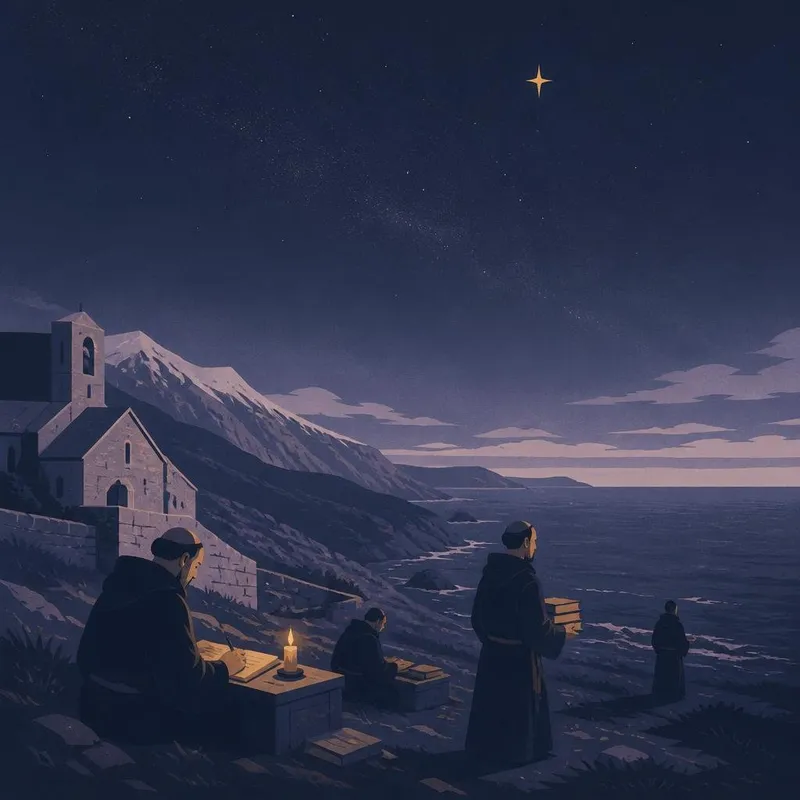
The Liturgy of the Hours, also called the Divine Office or breviary, is the Catholic Church's official daily prayer, made of psalms, Scripture readings, canticles and intercessions prayed at set times so that the whole day is made holy by praise. Its main hours are Morning Prayer and Evening Prayer, with the Office of Readings, Daytime Prayer and Night Prayer around them. Priests must pray it daily; lay Catholics are earnestly invited to pray any part of it, alone or with others.
The Liturgy of the Hours is the official daily prayer of the Catholic Church, prayed at set times from morning to night. It is also called the Divine Office or the breviary, and it is built mainly from the Psalms, with Scripture readings, hymns, canticles and intercessions.
Priests, deacons and many religious pray it daily. Lay Catholics are invited too, and most begin with a single hour, usually Morning or Evening Prayer. One hour takes about fifteen minutes, needs only a book or an app, and joins the person praying to the prayer of the whole Church.
What is the Liturgy of the Hours?
The Liturgy of the Hours is the Church's public prayer for each part of the day. Through psalms, Scripture readings and intercessions prayed at set times, it makes morning, daytime, evening and night holy by praise. It is liturgy, the prayer of the Church as a whole, and not a private devotion.
The Catechism says that the mystery of Christ "permeates and transfigures the time of each day, through the celebration of the Liturgy of the Hours" (CCC 1174). The Second Vatican Council states its purpose in one sentence: "the divine office is devised so that the whole course of the day and night is made holy by the praises of God" (Sacrosanctum Concilium 84).
The prayer does not belong to the person saying it. The same article of the Council calls it "the voice of the bride addressed to her bridegroom" and "the very prayer which Christ Himself, together with His body, addresses to the Father" (Sacrosanctum Concilium 84). Someone praying it alone at a kitchen table prays the same psalms as priests, monks and lay people around the world that day.
"Divine Office" comes from the Latin officium, a duty or service, and "breviary" is the book that contains it. The US bishops add a third name, "the Work of God (Opus Dei)," and describe it as "the daily prayer of the Church, marking the hours of each day and sanctifying the day with prayer" (USCCB, Liturgy of the Hours).
Where does the Liturgy of the Hours come from?
It grew out of Jewish prayer at fixed times of day, which Jesus and the apostles kept. The first Christians went on praying at set hours, and over the centuries monks and cathedral clergy shaped those hours into a daily cycle of psalms. After the Second Vatican Council, Pope Paul VI promulgated the revised office in 1970.
The Psalms describe prayer at fixed times: "Evening and morning and at noon I utter my complaint and moan, and he will hear my voice" (Psalm 55:17). Psalm 119 adds: "Seven times a day I praise thee for thy righteous ordinances" (Psalm 119:164). In exile, Daniel "got down upon his knees three times a day and prayed and gave thanks before his God" (Daniel 6:10).
The apostles kept these hours after the Resurrection. "Peter and John were going up to the temple at the hour of prayer, the ninth hour" (Acts 3:1), about three in the afternoon. Peter "went up on the housetop to pray, about the sixth hour" (Acts 10:9), around noon. The Didache, one of the oldest Christian writings outside the New Testament, gives the Lord's Prayer and adds: "Thrice in the day thus pray" (Didache 8).
Monasteries filled the day and night with psalms, and cathedral clergy kept the morning and evening hours with their people. The Council asked that "the traditional sequence of the hours" be restored "so that once again they may be genuinely related to the time of the day when they are prayed" (Sacrosanctum Concilium 88). Paul VI's revision spread the psalms over four weeks instead of one (Laudis Canticum 4).
What are the hours of the Divine Office?
The Roman office has five kinds of hour: the Office of Readings, Morning Prayer (Lauds), Daytime Prayer, Evening Prayer (Vespers) and Night Prayer (Compline). Morning and Evening Prayer are the most important. Daytime Prayer can be one short hour or three, prayed at midmorning, midday and midafternoon.
The Council called Lauds and Vespers "the two hinges on which the daily office turns" (Sacrosanctum Concilium 89). The other hours are built around them.
Office of Readings. The old night office, once called Matins, now "may be recited at any hour of the day" (Sacrosanctum Concilium 89). After three psalms it offers "a wider selection of passages from sacred Scripture for meditation, together with the finest excerpts from spiritual writers" (USCCB, quoting the General Instruction 55).
Morning Prayer. The General Instruction quotes St. Basil: it is said "in order that the first stirrings of our mind and will may be consecrated to God." Prayed at dawn, it also recalls the Resurrection (USCCB, quoting the General Instruction 38).
Daytime Prayer. The old hours of Terce, Sext and None fall at about nine, twelve and three o'clock. They are "linked to a commemoration of the events of the Lord's passion and of the first preaching of the Gospel" (USCCB, quoting the General Instruction 74 to 75). Outside a monastery or chapter, praying one of the three is enough (Sacrosanctum Concilium 89).
Evening Prayer. It takes its image from a psalm: "Let my prayer be counted as incense before thee, and the lifting up of my hands as an evening sacrifice!" (Psalm 141:2). Evening prayer is offered so that "we may give thanks for what has been given us, or what we have done well, during the day" (USCCB, quoting the General Instruction 39).
Night Prayer. It is "the last prayer of the day, said before retiring, even if that is after midnight" (USCCB, quoting the General Instruction 84). It begins with a short examination of conscience and ends with a hymn or antiphon to Mary.
What is in each hour?
Each hour follows the same basic pattern: an opening verse, a hymn, psalms or canticles with short antiphons, a Scripture reading with a response, and a closing prayer. Morning and Evening Prayer add a Gospel canticle, intercessions and the Our Father. Nearly every word comes from the Bible.
The Psalms are the core. The Catechism calls the Psalter "the masterwork of prayer in the Old Testament" (CCC 2585) and says: "Prayed by Christ and fulfilled in him, the Psalms remain essential to the prayer of the Church" (CCC 2586). Over four weeks the office covers almost all of them.
The first hour of each day opens with the invitatory verse from Psalm 51: "O Lord, open thou my lips, and my mouth shall show forth thy praise" (Psalm 51:15). The other hours open with a verse from Psalm 70 asking God to come quickly to help.
Three Gospel canticles anchor the main hours. Morning Prayer has the Canticle of Zechariah, the Benedictus, from Luke 1:68 to 79. Evening Prayer has the Magnificat, Mary's song from Luke 1:46 to 55. Night Prayer has the Canticle of Simeon: "Lord, now lettest thou thy servant depart in peace, according to thy word" (Luke 2:29).
The hymns and antiphons change with the season and the feast. The Catechism says they integrate the psalms "into the age of the Church, expressing the symbolism of the time of day, the liturgical season, or the feast being celebrated" (CCC 1177). In the last days of Advent, for example, Evening Prayer sings the O Antiphons before the Magnificat.
Who has to pray the Liturgy of the Hours?
Priests and deacons preparing for the priesthood must pray the full office every day. Permanent deacons pray the part set by their bishops' conference, and religious follow their constitutions. Lay people have no obligation, but the Church earnestly invites them to take part, alone or with others.
The Code of Canon Law says that priests and transitional deacons "are obliged to carry out the liturgy of the hours daily according to the proper and approved liturgical books" (Canon 276 §2). Members of religious institutes are bound "according to the norm of their constitutions" (Canon 1174 §1).
For everyone else, the same canon is an invitation. Lay Catholics "are also earnestly invited to participate in the liturgy of the hours as an action of the Church" (Canon 1174 §2). The Catechism goes further: the Liturgy of the Hours "is intended to become the prayer of the whole People of God" (CCC 1175).
The Council asked parishes to make that possible: "Pastors of souls should see to it that the chief hours, especially Vespers, are celebrated in common in church on Sundays and the more solemn feasts." Lay people "are encouraged to recite the divine office, either with the priests, or among themselves, or even individually" (Sacrosanctum Concilium 100). Unlike Sunday Mass, missing it is no sin for a lay person.
How do you start praying the Liturgy of the Hours?
Start with one hour, usually Morning or Evening Prayer, at a time you can keep every day. Use a free app or website that sets out the day's office in order, or a one-volume breviary. Pray slowly, aloud if you can, and add a second hour only once the first has become a habit.
1. Pick one hour. Morning Prayer suits people who pray before work, Evening Prayer those whose mornings are crowded. Night Prayer is the shortest and fits easily before sleep.
2. Choose a text. Free apps and websites such as iBreviary set out each day's office in full, which is the easiest way to begin. For a printed book, the one-volume Christian Prayer contains Morning, Evening and Night Prayer for the whole year. The complete Liturgy of the Hours comes in four volumes.
3. Learn the parts of the book. A printed breviary uses several ribbons: for the four-week Psalter, for the season or feast, and for the fixed parts called the Ordinary. An app removes this step.
4. Keep the time. Each hour belongs to its time of day, and "the true time for each hour is to be observed insofar as possible" (Canon 1175).
5. Pray the psalms, not just read them. The Catechism says the office demands "harmonizing the voice with the praying heart" and a deeper "understanding of the liturgy and of the Bible, especially of the Psalms" (CCC 1176). Some psalms will not match your mood. Pray them anyway, for the Church and with Christ, because a psalm "can be prayed in truth by men of all times and conditions" (CCC 2588).
Advent is a natural place to begin. The new liturgical year opens with Evening Prayer on the eve of the First Sunday of Advent, Saturday, November 28, 2026, and the four-week Psalter starts again at Week I.
How does the Liturgy of the Hours relate to the Mass?
The Hours carry the Mass into the rest of the day. They prepare for the Eucharist and flow from it, and they feed the personal prayer and devotions of ordinary Catholic life. They do not replace Mass, and they do not compete with the Rosary or private prayer.
The Catechism describes the Liturgy of the Hours as "like an extension of the Eucharistic celebration." It "does not exclude but rather in a complementary way calls forth the various devotions of the People of God, especially adoration and worship of the Blessed Sacrament" (CCC 1178). Our post on the Eucharist explains why the Mass stands at the center.
Because the office is the public prayer of the Church, it "is a source of piety, and nourishment for personal prayer," and those who pray it are urged "to attune their minds to their voices" (Sacrosanctum Concilium 90). The readings at each hour lead naturally into lectio divina, which the Catechism says "is thus rooted in the liturgical celebration" (CCC 1177).
The Catechism counts the Hours among the daily "rhythms of praying intended to nourish continual prayer" (CCC 2698). The Angelus marks the day the same way, and many Catholics pray the Rosary alongside the office.
Common questions
Can lay people pray the Liturgy of the Hours? +
Yes, and no permission is needed. Lay Catholics "are also earnestly invited to participate in the liturgy of the hours as an action of the Church" (Canon 1174 §2). The Council encourages them to pray it with priests, with one another or alone (Sacrosanctum Concilium 100).
Is the Liturgy of the Hours the same as the breviary? +
In practice, yes. The Liturgy of the Hours is the prayer; the breviary is the book that contains it. "Divine Office" is an older name for the same prayer, and the Catechism uses both names (CCC 1174).
Do I have to pray all the hours? +
No. Lay people are not obliged to pray any of them. Morning and Evening Prayer are "the two hinges on which the daily office turns" (Sacrosanctum Concilium 89), so one or both is the natural starting point. Night Prayer is a common next step.
How long does each hour take? +
Prayed slowly, Morning and Evening Prayer take about fifteen minutes each. Daytime Prayer and Night Prayer take five to ten minutes. The Office of Readings, with its two long readings, takes twenty minutes or more.
Is it still the Liturgy of the Hours if I pray it alone? +
Yes. It remains the public prayer of the Church even when one person prays it, and the Council encourages lay people to pray it "even individually" (Sacrosanctum Concilium 100). Praying it with others, and singing it, is preferred where possible (Sacrosanctum Concilium 99).